
Many remote workers already use AI chat tools a little, for a draft email or a quick summary. Fewer have a clear idea of what these tools are good at, where they go wrong, and how to fit them into a day of focused work. Co-Intelligence by Ethan Mollick is written for that gap.

The short answer
Its publisher, Penguin Random House, describes it as a playbook for working, learning and living in the age of AI, and says Mollick urges readers to engage with AI as co-worker, co-teacher and coach. Mollick is a Wharton professor who writes the One Useful Thing newsletter. Portfolio published the book on 2 April 2024. If you want a grounded, non-technical view of how to use AI at work, it is a good place to start.
Who it is for
- Remote knowledge workers who write, research, analyse or plan.
- Managers deciding how a distributed team should use AI.
- Job seekers who want to use AI in their search without sending generic applications.
It is not a technical book. For how AI systems are built, see Hands-On Large Language Models or AI Engineering in the further reading list.
Key ideas, in our words
- AI as a co-worker. Treat it as a fast, tireless but fallible colleague: give it context, review its work, and keep responsibility yourself.
- AI as a co-teacher. It can explain, quiz and give feedback, which helps when you are learning a new field on your own.
- AI as a coach. It can help you think through decisions and rehearse conversations, such as a salary negotiation.
- Experiment. The best way to learn what it can do in your job is to try it on real tasks and notice where it helps and where it fails.
- Stay in the loop. Check facts, keep your judgement, and do not hand over the parts of your work that make you good at it.
Applying it in a remote job
Remote work suits careful AI use, because so much of it is written. Some ways to try the book's approach, in our words:
| Task | How AI can help | What you still own |
|---|---|---|
| Writing an update | First draft from your notes, tone check | The facts and the decisions |
| Reviewing a long document | Summary and list of open questions | Reading the parts that matter |
| Learning a new tool | Explanations and practice questions | Checking against official docs |
| Preparing for a hard conversation | Rehearsal and counter-arguments | The conversation itself |
Before you start, check your employer's rules. Many companies limit which AI tools can be used with work data, and each tool documents its own privacy and data-training settings. Read those before pasting anything confidential.
AI and deep work
AI can make it easier to skip the hard thinking. That is the risk. Use it to clear shallow work, such as formatting, summarising and first drafts, so you have more time for the focused work that Deep Work describes. If you notice you have stopped thinking through problems yourself, step back.
For job seekers
- Use AI as a reviewer, not a writer. Ask it to check your CV against a job posting and point out gaps; then write the changes yourself.
- Practise interviews. Ask it to play an interviewer for a specific role and give feedback on your answers.
- Verify everything. AI can invent company facts. Check them on the company's own site; our guide to company careers sites shows where.
- Follow the rules. Some employers ask candidates not to use AI in assessments. Respect that.
When to skip it
- You already use AI daily and follow the field closely. Much will be familiar.
- You want technical depth. Read the more technical books in the list below.
- You want product recommendations. The book is about approach, not about which app to buy.
The verdict
Co-Intelligence is a calm, practical introduction to working with AI. For remote workers, its best advice is to experiment on real tasks while keeping your own judgement, and to use the time AI saves on the work only you can do.
The Amazon link for Co-Intelligence is the first card under Further reading below, with a few books that pair well with it.
FAQ
What is Co-Intelligence about?
How to work, learn and live alongside AI. The publisher says Mollick urges readers to engage with AI as co-worker, co-teacher and coach.
Who is Ethan Mollick?
A Wharton professor and the author of the One Useful Thing newsletter, according to his publisher.
When was it published?
Portfolio published it on 2 April 2024. The hardcover has 256 pages, and there is an audiobook read by the author.
Is it out of date?
AI tools change quickly, so specific examples age. The book's approach to working with AI is what holds up.
Can I use AI for job applications?
For drafting and feedback, carefully. Check every fact, keep your own voice, and follow any rules the employer sets.
Further reading
Books we think are worth your time if you want to go deeper. We have not been paid to include any of them.
As an Amazon Associate we earn from qualifying purchases — more in our affiliate disclosure

Hands-On Large Language Models
Jay Alammar & Maarten Grootendorst
Practical LLM understanding and generation.
View on Amazon ↗ Affiliate link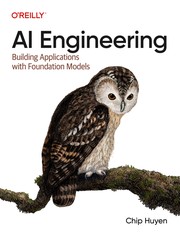

Deep Work
Cal Newport
A practical framework for protecting long stretches of focus — useful for solo founders and remote workers.
View on Amazon ↗ Affiliate link
Book covers via Open Library; cover art belongs to the publishers.
Sources
All links opened and checked on 19 Nov 2026. Figures are as published by each source on the date shown; we did not run our own benchmarks.
- Penguin Random House: Co-Intelligence by Ethan Mollick, checked 5 Nov 2026